

2026-07-09
Street lighting has come a long way, and if you've noticed your neighborhood glowing a little differently at night, you're likely seeing the work of LED street lights. Composed of efficient light-emitting diodes (LEDs), these modern street lights really hit the mark when it comes to lighting up roads, sidewalks, and parking areas.
So, why are communities making the switch? Let's walk you through everything you need to know about LED street lights and why they're the go-to choice for those in the know about urban planning. Along with helping us see better at night, these lights are paving the way for a brighter, more eco-friendly future.
LED street lights are a modern lighting technology that offers energy efficiency, long lifespan, and quick response times compared to traditional lights. Key aspects include their materials, energy savings of up to 70%, their environmental benefits from containing no mercury, and the ability to integrate with smart city control systems for features like dimming and remote monitoring. Understanding wattage, lumen output, color temperature (Kelvin), and light distribution patterns is crucial for effective and safe installation. 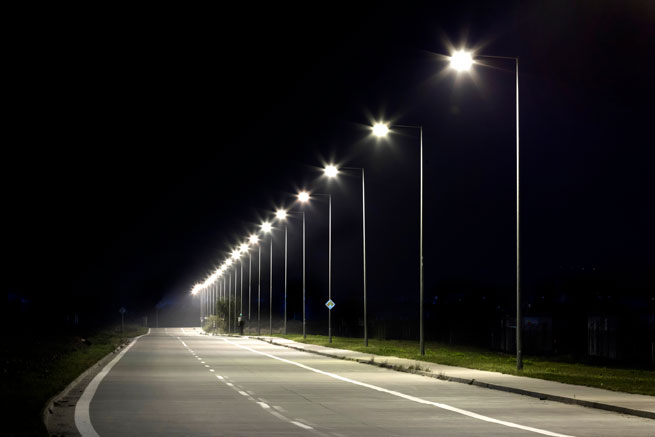
LEDs are becoming increasingly popular in the field of lighting, and it's not hard to see why. They have a remarkable ability to convert electricity into visible light efficiently, far outperforming traditional lighting methods.
Unlike incandescent bulbs that squander a substantial amount of energy as heat, LEDs work at lower temperatures, guaranteeing that almost all the energy they use is turned into light. What are other advantages of LED street lighting?
One of the most compelling benefits of LED street lighting is its remarkable capacity to drastically decrease energy consumption in comparison to traditional lighting. LED fixtures consume up to 50% less energy while delivering equivalent, if not better, levels of illumination.
This decrease in energy usage not only translates to cost savings for municipalities in terms of reduced electricity bills but also plays a significant role in reducing greenhouse gas emissions, thereby fostering a more environmentally friendly and sustainable landscape.
LEDs are designed to endure, boasting an average operational life ranging from 50,000 to 100,000 hours. This extraordinary longevity results in decreased maintenance expenses for municipalities, as there is a lower need for replacements and repairs.
Consequently, LED street lighting not only lessens disruptions to traffic but also lowers the associated labor costs.
Now, let’s light your way to financial benefits. Although LED street lighting systems might demand a higher initial investment when compared to traditional alternatives, the long-term cost savings they bring are indisputable.
The diminished energy consumption, extended lifespan, and reduced maintenance needs mean that municipalities recoup their initial investment in a relatively brief period.
Energy efficiency is synonymous with lower energy bills. When municipalities adopt LED street lighting technology, they can experience a substantial reduction in their energy costs.
This, in turn, releases resources that can be directed towards other critical public services or infrastructure projects, ultimately benefiting the entire community.
LEDs offer superior illumination quality that enhances visibility on the streets, promoting safer road conditions.
The benefits? Improved safety lowers accident rates and expenses associates with accidents.
To choose an LED street light, select the correct light distribution type based on the road or area, determine the appropriate wattage and lumens for the pole height and coverage, choose high-quality LED chips and an efficient driver for longevity, and consider advanced features like smart controls and thermal management for optimal performance and energy savings. Finally, select a suitable color temperature (e.g., cool white for highways, warm yellow for residential streets) to enhance safety and ambiance.
1、Determine Light Distribution Type
Type I: For single lanes or one lane with a sidewalk.
Type II: For two to three lanes, including crosswalks.
Type III: For roads with more than three lanes.
Type IV: Suitable for parking lots.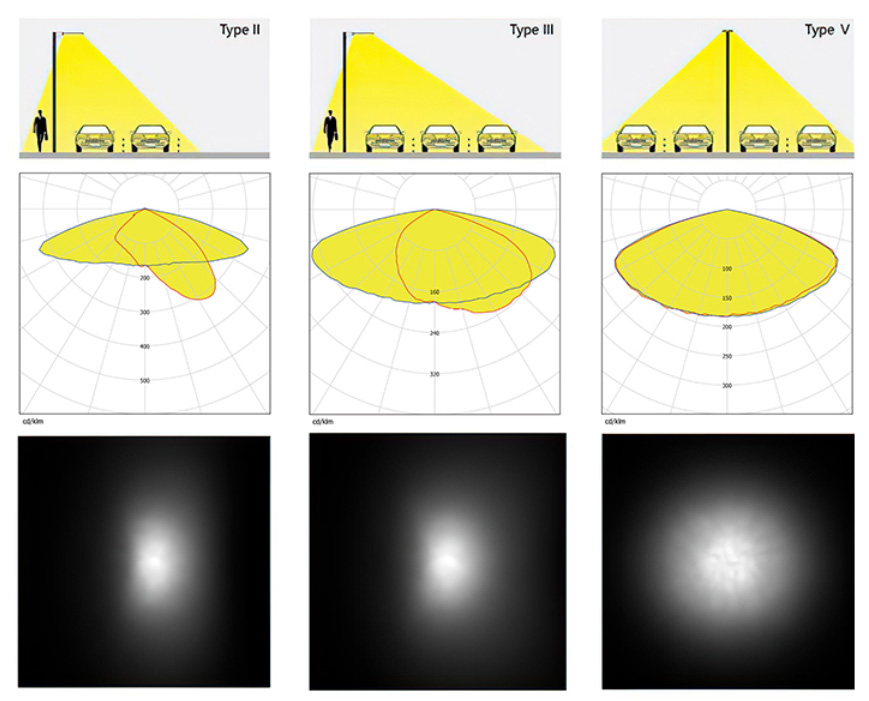
Wattage:
Lower wattages are suitable for shorter poles, while higher wattages are needed for taller installations.
Lumens:
Match the lumens to the specific area's requirements; highways and main roads need higher lumens (e.g., 6,400-18,000 lumens) than residential streets.
3、Evaluate LED Chips and DriverLED Chips:
Choose quality chips (e.g., brand 2835,3030, 5050) for better stability, brightness, and performance.
LED Driver:
Look for an effective, constant-current driver that converts AC to DC for consistent power over the light's lifespan.
4、Consider Color Temperature (Kelvin)Warm White (3000K): Provides a cozy, residential feel.
Cool White (5000K-6500K): Ideal for highways and expressways to enhance alertness and visibility.
5、Assess Optics and Beam AnglesThe optics and beam angles determine light distribution.
Choose optics that are suited to the road's geometry, such as curves or intersections, to ensure effective and uniform coverage.
6、Prioritize Thermal ManagementEffective heat dissipation is crucial for longevity.
Look for integrated designs with heat sinks to prevent overheating and premature failure.
7、Integrate Smart Controls (Optional)Smart features like dimming, motion sensors, and remote monitoring enhance energy management.
These controls allow for flexibility and significant energy savings by adjusting brightness as needed.
Types of Street Lights: A Detailed Look
Exploring the types of LED street lights can help you match the right technology and design to your specific lighting needs. The following is an overview of some popular street light fixtures and how they fit into different lighting strategies.
Unicornlite LED street/area lights are designed with cutting-edge LED technology to ensure maximum luminous efficiency and energy savings. These fixtures are ideal for illuminating public spaces, parking lots, and walkways. Their sturdy construction ensures protection against the elements, making them a reliable choice for municipalities looking to upgrade their lighting systems with minimal maintenance and long-term cost benefits.
They offer continuous, reliable service from evening until morning without the need for manual intervention. These lights are perfect for areas requiring 24/7 illumination, such as agricultural facilities, warehouses, and large estates. Their energy-efficient LEDs, paired with a photocell sensor, make them an economical choice, reducing energy costs while providing ample lighting throughout the night.
Related Products: Poseidon G3 Series Commercial Street Lighting Fixtures
Related Products: Meta Series Led Streetlight Outdoor Lighting


